Ranks
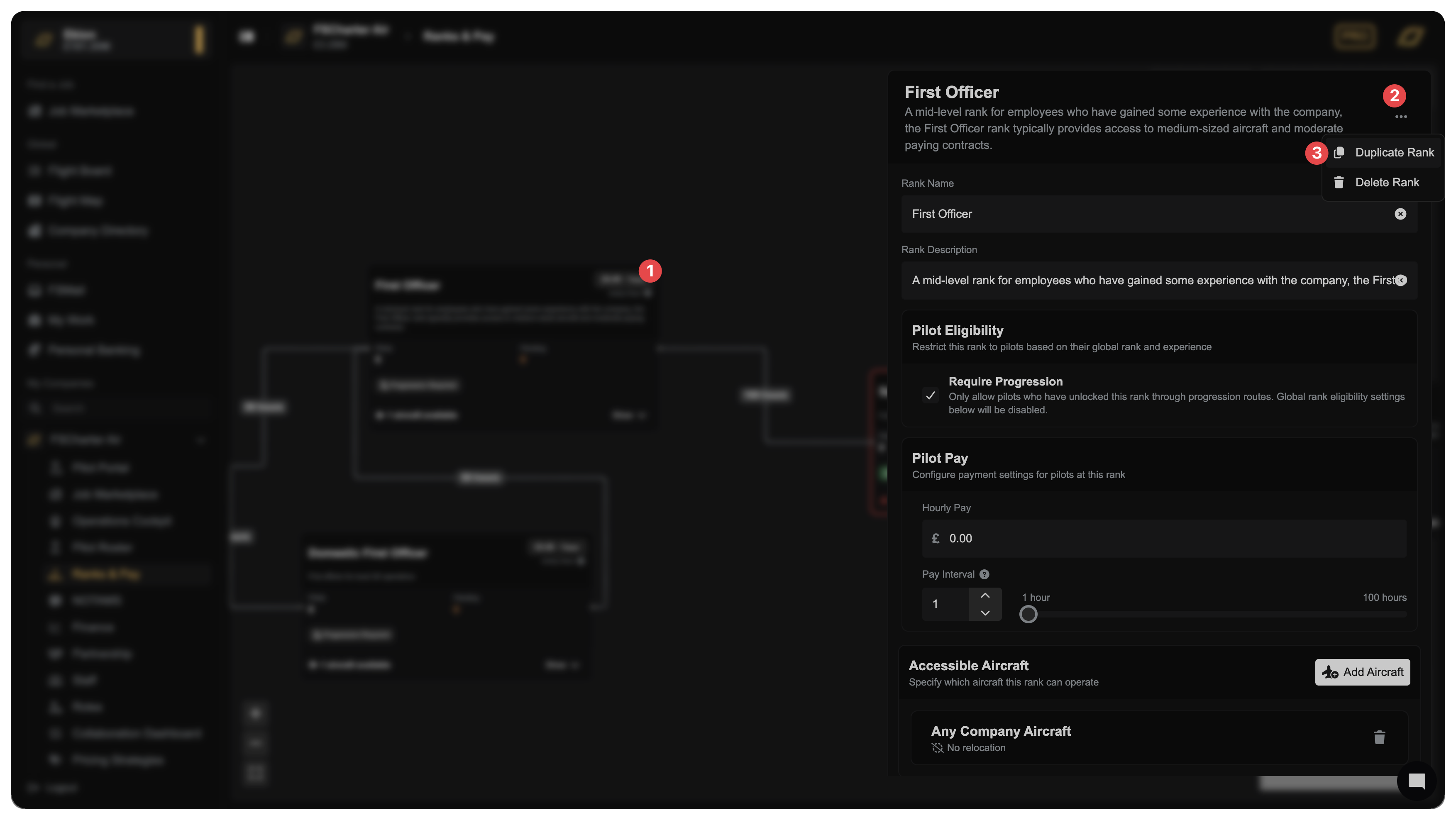
Ranks define the structure of your pilot workforce. Each rank controls what aircraft pilots can fly, how much they earn, and how they progress through your company. Access Ranks & Pay by first selecting your company in the sidebar 1 and then clicking Ranks & Pay 2.
Understanding Ranks
Every pilot on your roster holds a rank. Ranks serve three purposes:
Pay: Ranks determine the hourly rate and frequency that pilots get paid. For example, one rank might pay £1,000 per hour every hour, whilst another might pay £2,000 per hour but only releases payment after 10 hours (so effectively £20,000 every 10 hours)
Aircraft Access: The rank that a pilot holds determines what aircraft they can fly for your company.
Progression: As pilots build up logbook hours they can unlock progressions to higher ranks in your company.
When you create a company no ranks are created my deafult. You must create ranks to enable pilots to fly for you.
Creating a Rank
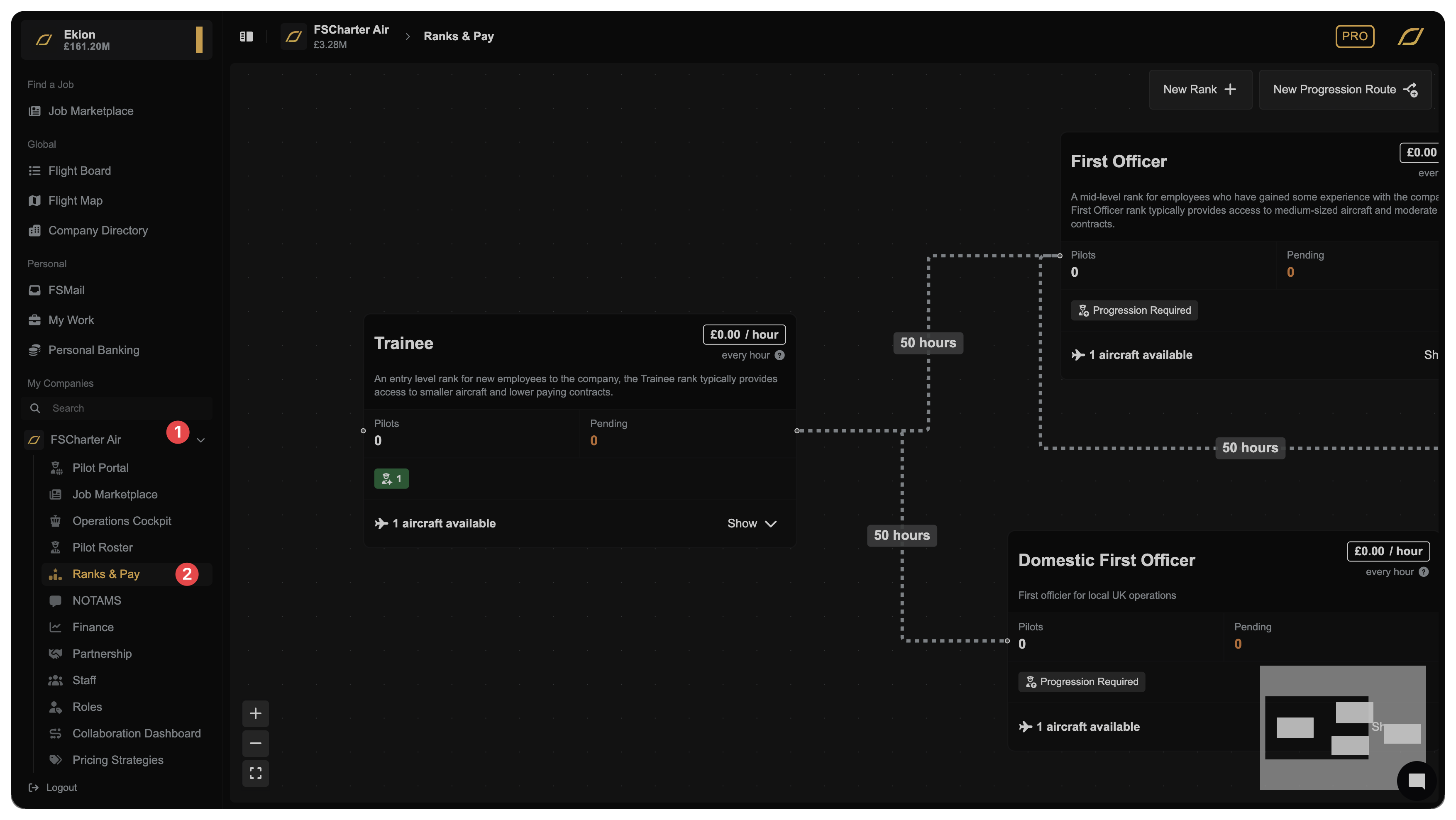
Click the create button on the Ranks & Pay page to open the rank creation dialog 1. You may also select any rank to open the same view in edit mode to change a rank.
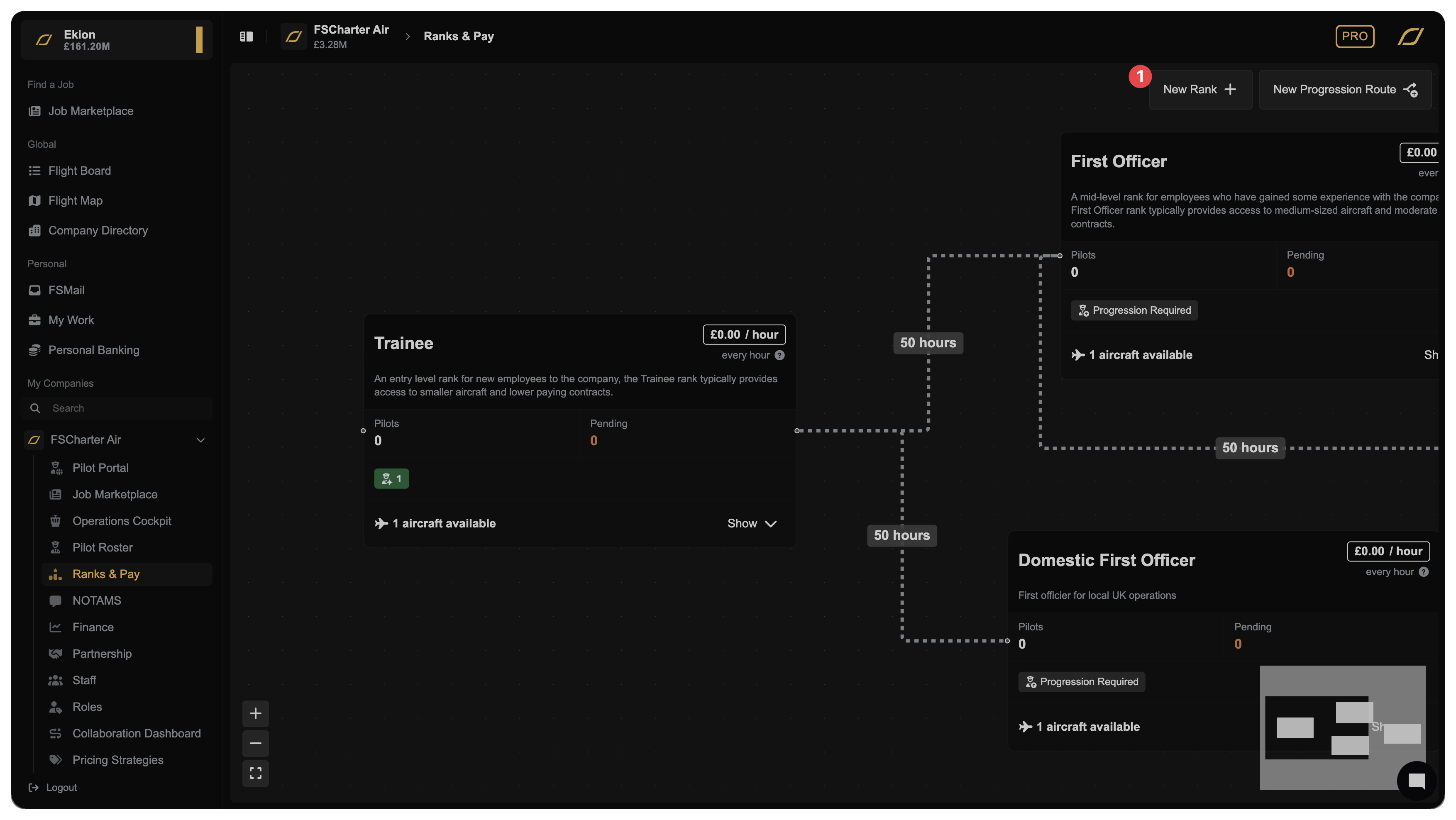
Enter a Name that clearly identifies the rank's role (such as "Cadet", "First Officer", or "Captain") 1. The Description field lets you provide additional context that pilots will see when browsing available ranks 2.
Set the Hourly Pay and Pay Interval 3 to determine how much pilots at this rank earn per flight hour and how often they are paid. Consider your company economics when setting pay as pilots need to be paid from flight revenue, so higher pay rates require more profitable routes to sustain.
Pilot Eligibility
The Pilot Eligibility section controls who can apply for this rank, whether they need your approval or whether the rank can only be unlocked by first completing hours at earlier ranks.
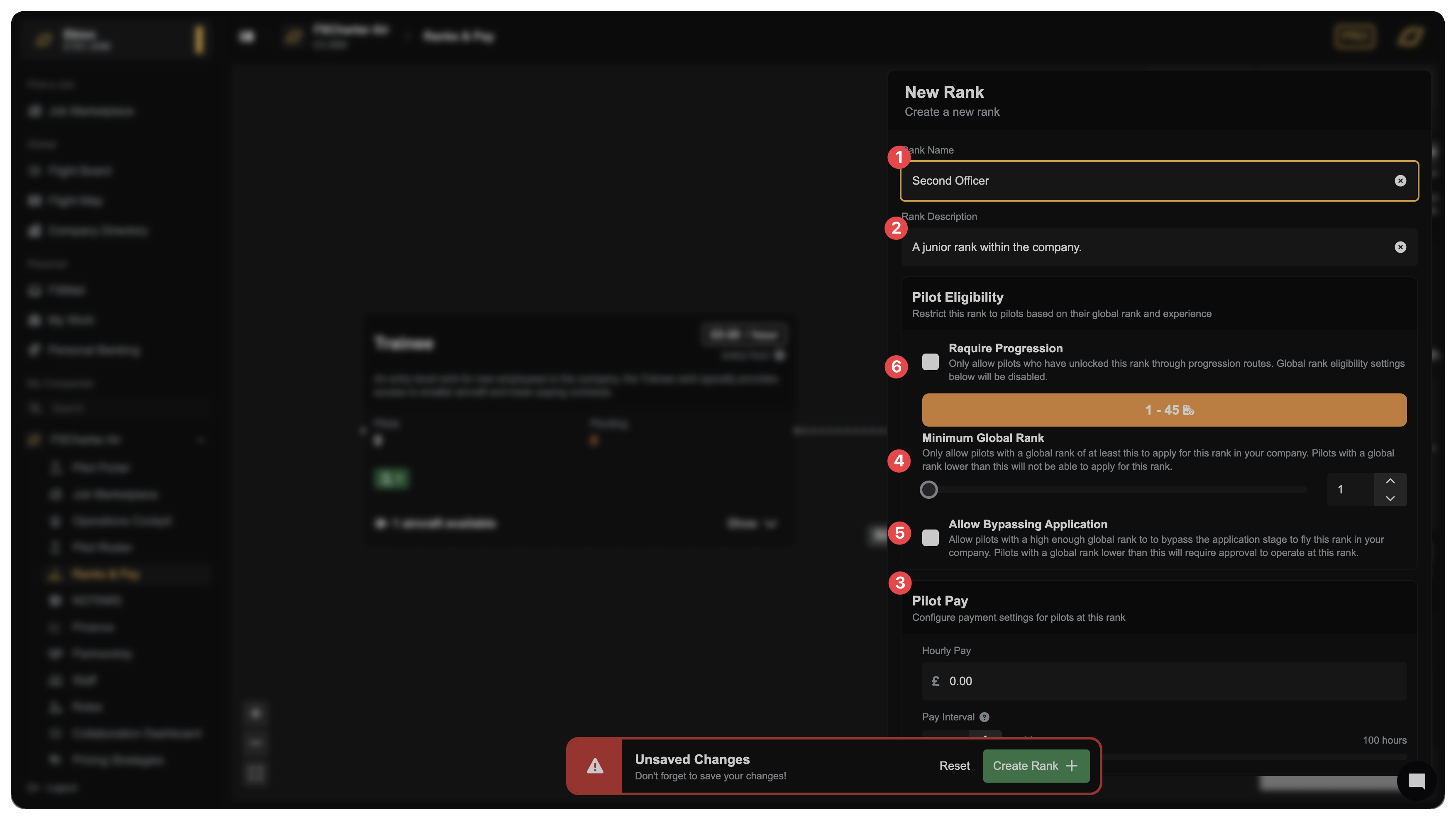
Minimum Global Rank 4
This sets the experience threshold for the rank. Pilots below this global rank level won't see this rank as an option when applying. Use this to ensure entry-level ranks are accessible to new pilots while senior ranks require proven experience.
Allow Bypassing Application 5
When enabled, pilots meeting the minimum global rank requirement are accepted automatically - no manager approval needed. This reduces your administrative workload for common entry-level positions.
When disabled, every application requires manual review. Use this for premium ranks where you want to vet pilots before granting access.
Require Progression 6
If enabled, this setting means that the rank will not be available to new pilots. Only existing pilots who have earned enough experience on previous ranks can switch to this rank via their Career Progression tab of your Pilot Portal.
Approval Memory
When a pilot is accepted to a rank (either automatically or through manual approval), the system remembers this approval permanently. If the pilot later switches to a different rank within your company, they can switch back to any previously-approved rank without re-applying (assuming that they still meet the required criteria for that rank).
Company managers can revoke these stored approvals from the Pilot Roster page if needed, which will require the pilot to apply again to access that rank.
Accessible Aircraft
One of the most powerful features of ranks is controlling which aircraft pilots can fly 1. You can specify all aircraft or assign the rank to specific airframes, types, groups or categories. Add new aircraft to the rank by clicking the Add Aircraft button 2 and edit existina assignments by selecting the constraint type in the list 3.
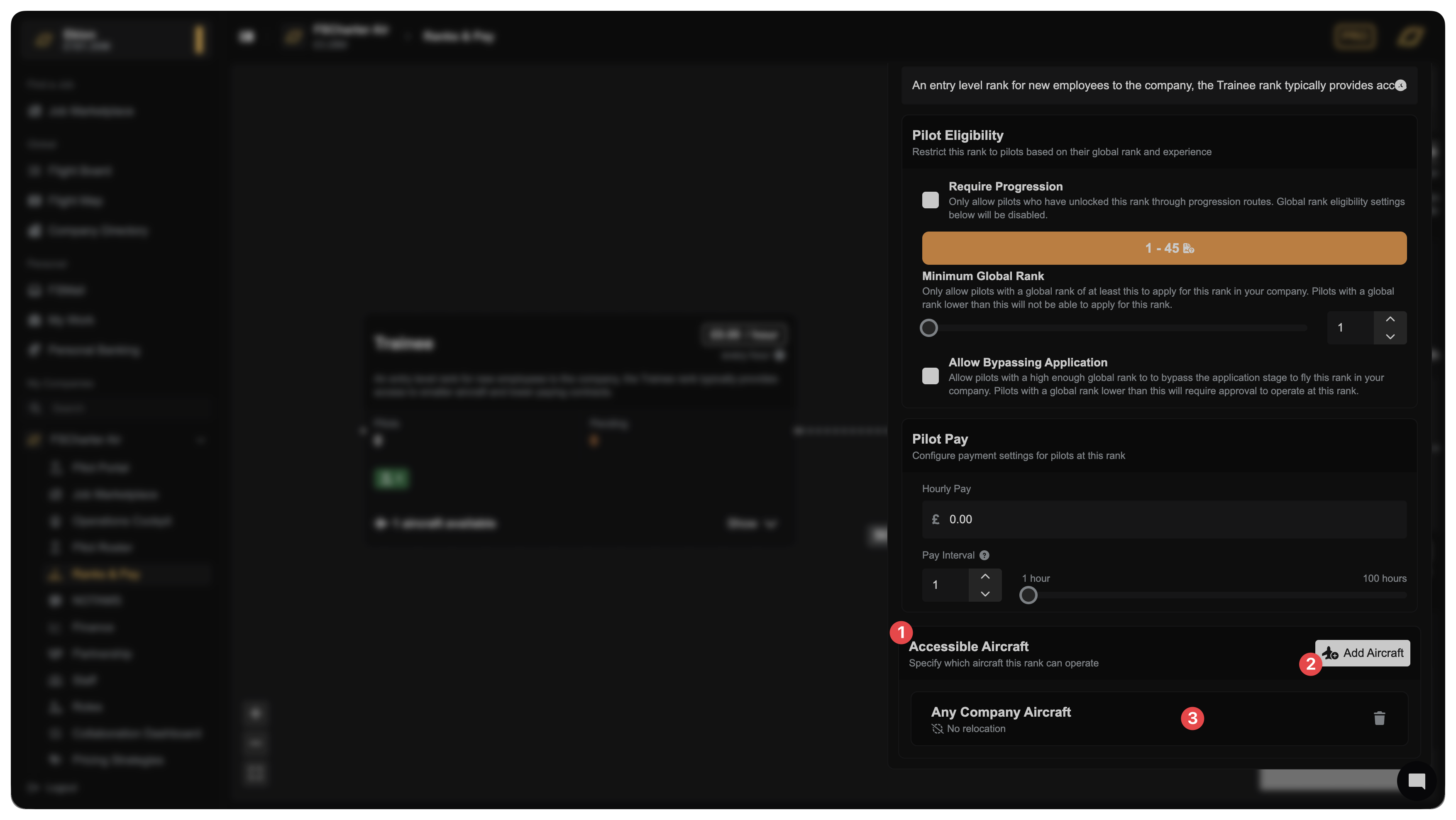
Allow Relocation
If Allow Relocation is enabled, pilots at this rank can reposition aircraft to complete jobs. This means a pilot can accept a job from Airport A even if the aircraft is currently at Airport B—they'll fly a ferry leg first.
If disabled, pilots can only accept jobs where the aircraft is already at the departure airport.
Creating Progression Routes
Connect ranks to define advancement paths. Drag from one rank's output handle to another rank's input to create a connection. Once created, select the progression to change the required hours.
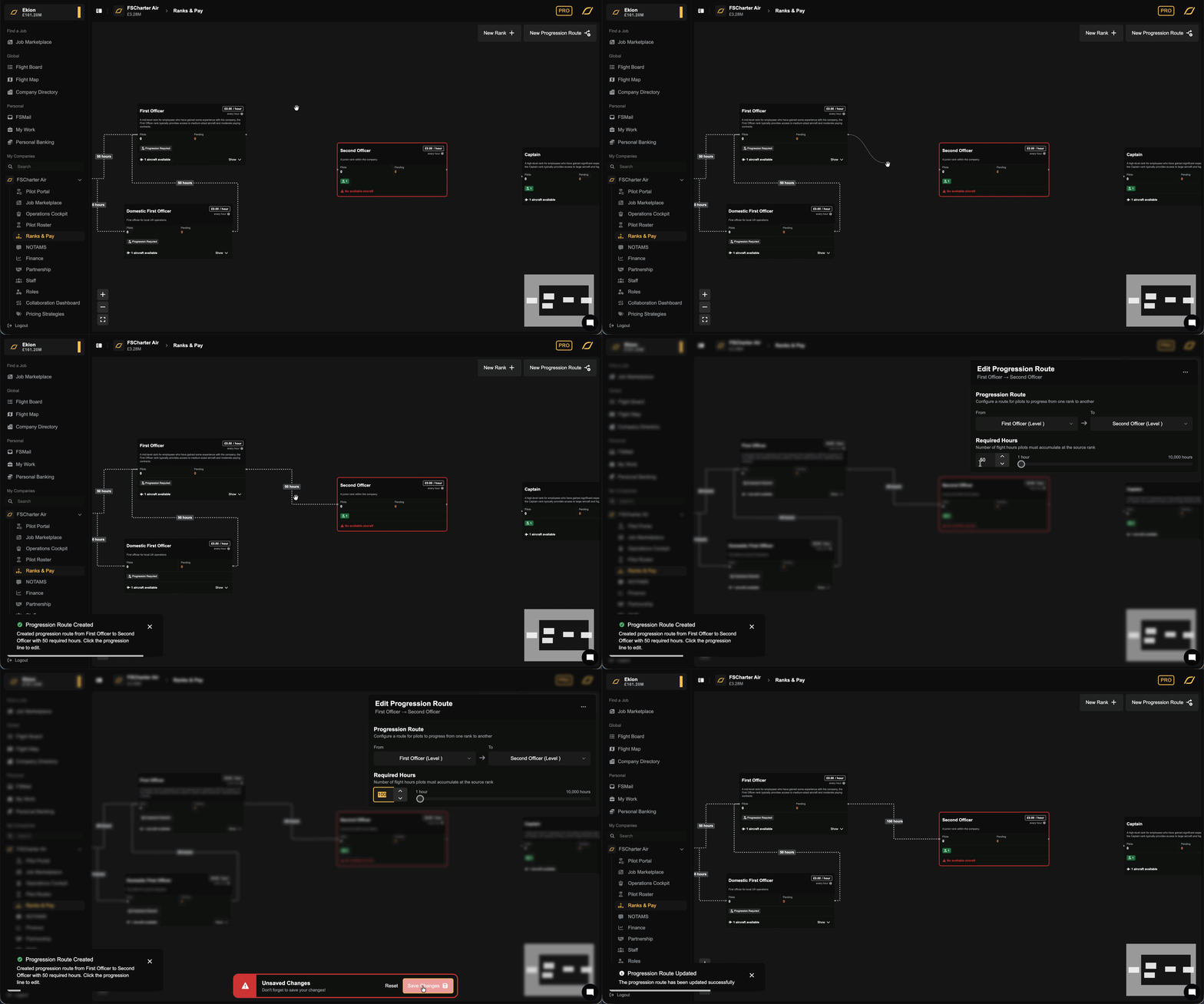
When ranks are connected, pilots who complete requirements at one rank become eligible for the next. The system tracks hours flown, and pilots can see in their Career Progression view exactly what's needed to advance.
Duplicating Ranks
When building similar ranks you can use duplication to save time. Click the menu on any rank node 1 and click the ... menu 2. From there, select Duplicate Rank 3. A copy is created with identical pay settings, eligibility rules, and aircraft constraints. Rename it and adjust as needed.